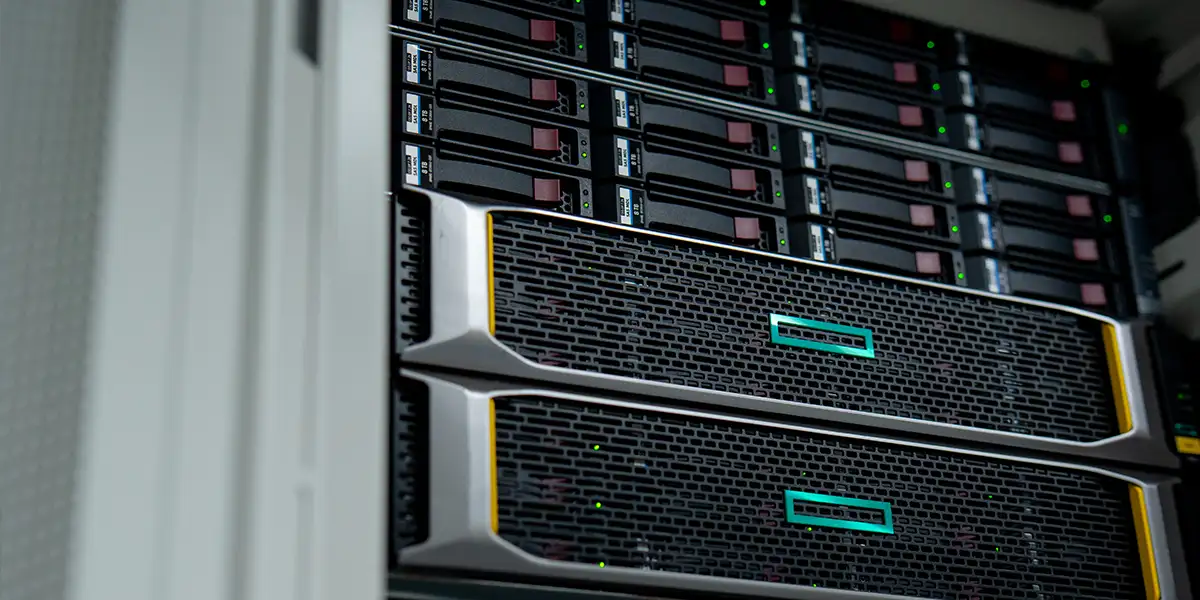
While cloud platforms have introduced greater flexibility into modern IT infrastructure, dedicated servers remain the preferred choice for many organisations. Workloads that demand consistent performance, bespoke hardware configurations or complete control over the operating environment often benefit from dedicated infrastructure.
Because a dedicated server is allocated to a single organisation, there is no competition for physical resources from other tenants. This creates a stable foundation for applications where reliability, performance and operational control are priorities.
Exclusive access to hardware resources
Perhaps the greatest advantage of a dedicated server is that every hardware resource is reserved exclusively for your organisation.
Processing power, memory, storage and network bandwidth are not shared with other customers, allowing applications to make full use of the available infrastructure. This eliminates the variability that can occur in shared environments where neighbouring workloads may consume significant resources during periods of high demand.
For organisations operating business-critical systems, this level of resource consistency can simplify capacity planning and improve overall application stability.
Predictable performance
Many business applications perform best when infrastructure behaves consistently.
High-traffic websites, large databases, ERP platforms and other resource-intensive applications often experience sustained demand rather than occasional spikes. Dedicated servers provide predictable performance because workloads have uninterrupted access to the underlying hardware.
This consistency can improve user experience, reduce latency and help maintain service levels during periods of increased activity.
Greater control over your environment
Dedicated servers allow organisations to configure infrastructure around their own operational requirements.
Hardware specifications, operating systems, software versions, storage layouts and networking configurations can all be selected to support specific workloads. This level of flexibility is particularly valuable where applications have specialist requirements or where organisations need to meet internal technical standards.
Dedicated infrastructure also allows businesses to retain greater control over how applications are deployed, maintained and updated throughout their lifecycle.
Stronger workload isolation
Dedicated servers are single-tenant environments, meaning the physical hardware is used by one organisation.
This separation provides greater isolation than shared hosting environments, reducing the possibility of neighbouring workloads affecting performance or introducing operational complexity.
For organisations handling sensitive information or operating within regulated industries, physical separation can also support broader security and compliance objectives alongside appropriate access controls, monitoring and patch management.
Flexibility to support specialist workloads
Some workloads require hardware configurations that are difficult to achieve within standard shared hosting platforms.
Dedicated servers can be tailored with specific processor types, memory capacity, storage configurations or graphics processing units (GPUs) depending on the application’s requirements.
This makes dedicated infrastructure suitable for workloads such as:
- Large relational databases
- Artificial intelligence and machine learning
- High-performance computing (HPC)
- Video rendering and media processing
- Business-critical enterprise applications
- Software requiring specific hardware licensing
Rather than adapting applications to fit the infrastructure, organisations can design the infrastructure around their operational requirements.
Improved security control
Security is influenced by many factors, including software updates, monitoring, access management and user practices. Dedicated servers provide a strong foundation by giving organisations full control over how the environment is configured and secured.
Security policies can be tailored to individual workloads, while operating systems, applications and network configurations can be managed according to internal requirements or regulatory obligations.
Combined with managed security services, proactive monitoring and physical data centre security, dedicated servers can form part of a robust infrastructure strategy for organisations processing sensitive information.
Reliable foundation for high availability
A single dedicated server still represents a single point of failure. However, dedicated servers are frequently deployed as part of a wider resilient infrastructure.
Multiple servers can be combined using clustering, load balancing and failover technologies to create highly available environments capable of maintaining services if individual hardware components fail.
Dedicated infrastructure therefore provides the flexibility to build resilient platforms designed around an organisation’s availability requirements rather than relying on predefined hosting architectures.
Long-term infrastructure planning
Dedicated servers offer a stable platform for organisations with predictable resource requirements.
Rather than continuously adjusting infrastructure to changing consumption models, businesses can size dedicated hardware around expected workloads and expand their environment as demand grows. This makes long-term planning simpler for organisations with established applications and relatively consistent resource utilisation.
Dedicated servers can also form part of a wider hybrid infrastructure, working alongside private cloud or public cloud services where different workloads have different operational requirements.
What should you consider?
Although dedicated servers provide significant advantages, they are not the best solution for every workload.
Organisations should consider:
- Whether applications genuinely require dedicated physical resources.
- Future growth and expected hardware requirements.
- Whether high availability will require multiple servers.
- Internal expertise for ongoing management and maintenance.
- Backup, disaster recovery and monitoring requirements.
- Whether a managed hosting provider would reduce operational overhead.
Choosing infrastructure should always begin with workload requirements rather than hardware specifications alone.
The next steps
Dedicated servers continue to provide an excellent platform for organisations requiring consistent performance, infrastructure control and workload isolation. While cloud services remain the right choice for many applications, dedicated infrastructure offers advantages that remain difficult to replicate where performance, security and operational control are priorities.
If you’re evaluating dedicated hosting, a consultative assessment of your applications and infrastructure requirements can help determine whether dedicated servers are the right fit and how they should be designed to support your long-term objectives. Contact us for an initial conversation.