Choosing the right hosting solution starts with understanding the terminology. Many businesses assume that a bare metal server and a managed server are competing products, when in reality they describe two different aspects of a hosting environment.
A bare metal server refers to the hardware being used, while management refers to who is responsible for maintaining that infrastructure. Understanding this distinction makes it much easier to identify the solution that best supports your applications, internal resources and long-term business goals.
What is a bare metal server?
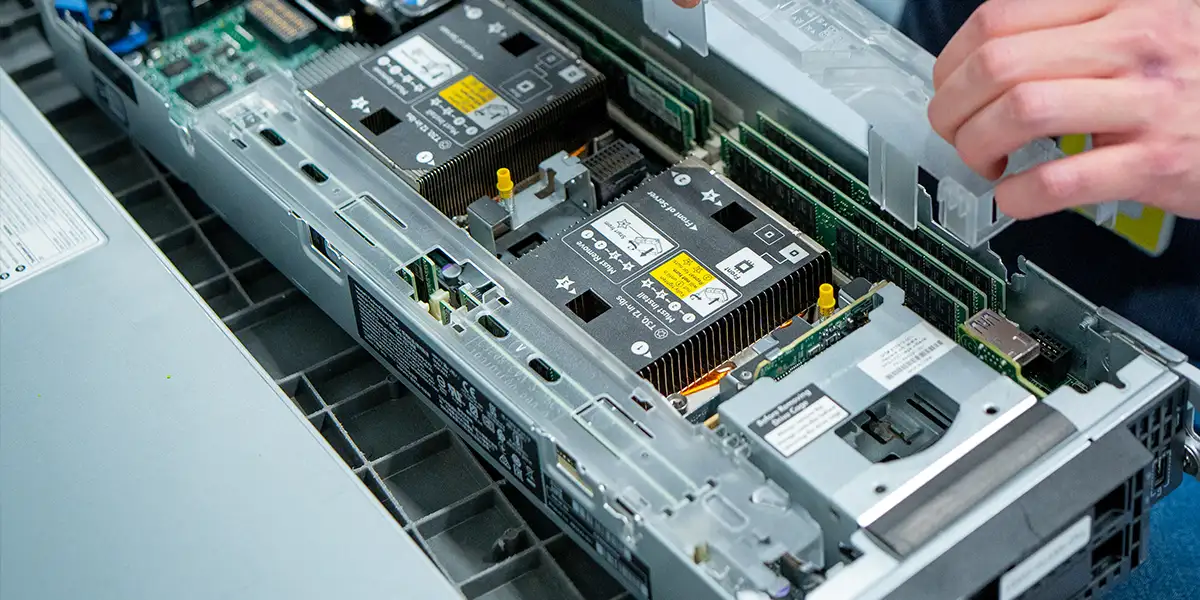
A bare metal server is a physical server dedicated exclusively to a single organisation. All processing power, memory, storage and networking resources are reserved for one customer, providing predictable performance and complete control over the environment.
Because the operating system is installed directly onto the hardware, organisations are free to configure the server around their own requirements. They can choose the operating system, deploy their preferred applications and, if required, install a hypervisor or container platform such as Docker or Kubernetes.
Bare metal servers are commonly used for workloads that demand consistent performance, including enterprise applications, databases, artificial intelligence, big data analytics and high-performance computing.
What is a managed server?
A managed server refers to a hosting service where the provider takes responsibility for the day-to-day operation of the server.
Rather than simply supplying the infrastructure, the provider supports the ongoing management of the environment. Depending on the level of service, this may include operating system updates, proactive monitoring, troubleshooting, security patching, hardware maintenance and technical support.
This allows organisations to reduce the operational burden on their internal IT teams while benefiting from specialist infrastructure expertise.
Importantly, a managed server is not a type of hardware. A dedicated server, private cloud or bare metal server can all be delivered as managed services.
Bare metal vs managed: understanding the difference
The easiest way to think about these terms is that they answer different questions.
A bare metal server answers the question, “What infrastructure am I using?”
A managed server answers the question, “Who is responsible for looking after it?”
Because they describe different things, they are not mutually exclusive. Many organisations choose a managed bare metal server, combining the performance and flexibility of dedicated physical hardware with the reassurance of expert management and support.
Which option is right for your business?
The decision is rarely about choosing between bare metal or managed hosting. Instead, organisations should first decide whether dedicated physical infrastructure is appropriate for their workloads, before considering how that infrastructure will be managed.
If your applications require dedicated resources, specialist hardware or predictable performance, a bare metal server may be the right foundation. From there, you can decide whether your internal team has the expertise and capacity to manage the environment or whether a managed service would provide greater value.
For organisations with experienced infrastructure teams, managing the environment internally may align with existing operational processes. Others prefer to work with a managed hosting provider, allowing their internal resources to focus on business applications rather than infrastructure maintenance.
Why many organisations choose managed bare metal
For businesses running critical applications, combining bare metal infrastructure with managed services often delivers the best balance between performance and operational efficiency.
Dedicated hardware provides predictable performance and complete control over the hosting environment, while managed services reduce the day-to-day responsibility of maintaining that infrastructure. Routine activities such as monitoring, operating system updates, troubleshooting and hardware support can be handled by experienced engineers, allowing internal teams to concentrate on delivering value to the business.
This approach is particularly beneficial for organisations with lean IT teams or those looking to access specialist expertise without expanding internal resources.
What should you consider?
Before selecting a hosting solution, consider both your technical requirements and your operational capabilities.
If your applications demand dedicated hardware, bare metal infrastructure may be the right choice. However, it is equally important to assess who will be responsible for maintaining the environment, applying updates, monitoring performance and responding to issues when they occur.
Choosing the right solution means balancing performance, control and available expertise. For many organisations, the answer is not one approach or the other, but a managed bare metal platform designed around their specific requirements.
The next steps
Bare metal servers and managed servers are not competing technologies. One describes the infrastructure, while the other describes how that infrastructure is supported.
Understanding this distinction makes it easier to choose a hosting solution that aligns with both your workload requirements and your internal capabilities. Whether you manage the platform yourself or work with an experienced hosting provider, the goal should be to build an environment that delivers reliable performance today while supporting future growth. Speak to one of our cloud experts for an initial consultation.