
Load balancing addresses these challenges by intelligently distributing incoming traffic across multiple dedicated servers rather than relying on a single machine. By making better use of available infrastructure, organisations can improve performance, support higher traffic volumes and reduce the impact of hardware or software issues.
Although load balancing is widely used across cloud and hybrid environments, it is also an effective way to optimise dedicated server infrastructure.
What is load balancing?
Load balancing is the process of distributing incoming traffic across multiple servers to prevent any one server from becoming overloaded.
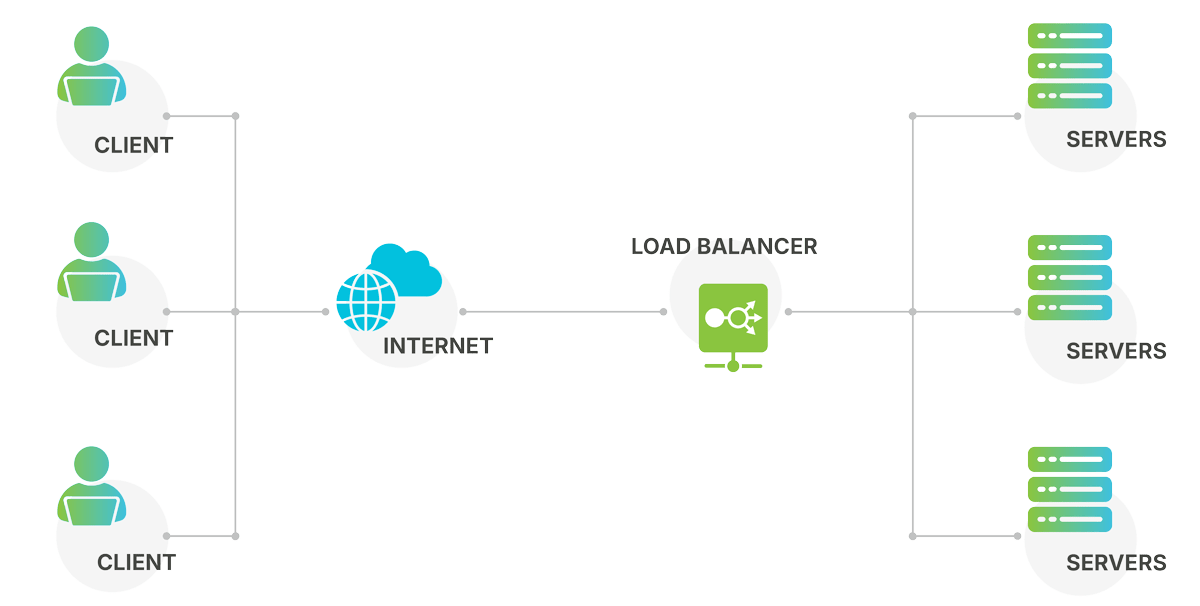
In a dedicated server environment, a load balancer sits between users and your infrastructure. Rather than sending every request to the same server, it assesses the available resources and directs traffic to the server best placed to respond.
This allows workloads to be shared across multiple dedicated servers, helping maintain consistent performance while making more efficient use of your infrastructure.
Why is load balancing important?
One of the biggest advantages of a dedicated server is access to exclusive physical resources. However, even the most powerful server has limits.
As visitor numbers increase or application demand grows, a single server may begin to experience higher utilisation, which can affect response times and the overall user experience.
Load balancing helps overcome this challenge by distributing traffic across multiple dedicated servers. Instead of placing every request on one machine, workloads are shared throughout the environment, reducing bottlenecks and allowing applications to remain responsive during periods of increased demand.
This approach also improves resilience. If one server becomes unavailable, traffic can be redirected to another healthy server, helping minimise disruption while maintaining service continuity.
How does load balancing work?
Although the process happens in milliseconds, the principle is straightforward.
When a user accesses a website or application, the request is first received by the load balancer rather than the dedicated server itself. The load balancer assesses the health and current workload of each available server before directing the request to the most appropriate destination.
This process repeats continuously, ensuring requests are distributed efficiently across the available infrastructure.
At the same time, the load balancer performs regular health checks. If a dedicated server becomes unavailable or is taken offline for maintenance, it is temporarily removed from the available pool and traffic is automatically redirected to the remaining healthy servers. Once it is available again, it can begin receiving traffic without affecting users.
Improving response times
One of the primary reasons organisations implement load balancing is to improve application performance.
Rather than relying on a single dedicated server to process every request, workloads are shared across multiple servers. This allows each server to operate more efficiently, helping reduce delays and maintain a consistent user experience.
As demand grows, additional dedicated servers can be introduced behind the load balancer, allowing capacity to increase without significantly changing the underlying application. This provides a more scalable approach than continually upgrading a single server.
The role of security
Security also plays an important role in maintaining application performance.
Large volumes of malicious traffic or a distributed denial-of-service (DDoS) attack can affect response times long before services become unavailable. Load balancing can help reduce this impact by distributing traffic across multiple servers while supporting wider security measures.
Modern load balancing solutions can also provide features such as SSL termination, allowing encryption and decryption to be handled by the load balancer rather than individual servers. Some solutions can additionally inspect application traffic and filter malicious requests before they reach your infrastructure.
While load balancing should not replace a comprehensive security strategy, it can contribute to both service availability and overall application performance.
Layer 3 and Layer 7 load balancing
Not all load balancing operates in the same way.
Layer 3 load balancing distributes traffic using network information such as IP addresses. This provides fast and efficient traffic distribution across dedicated servers.
Layer 7 load balancing operates at the application layer, allowing routing decisions to be made based on the content of each request. This enables more intelligent traffic management for complex applications and websites.
The most appropriate approach depends on your applications, infrastructure and operational requirements.
Load balancing and HA
Load balancing is often deployed alongside High Availability (HA) because the two technologies work together to improve infrastructure resilience.
While load balancing distributes traffic across multiple dedicated servers, HA removes single points of failure throughout the wider environment. If one dedicated server experiences an issue, traffic can be redirected to the remaining healthy servers, helping applications remain available while the fault is resolved.
For organisations running business-critical workloads, combining load balancing with an HA architecture creates a resilient platform which supports both performance and business continuity.
The next steps
Load balancing is one of the most effective ways to improve the performance and resilience of a dedicated server environment. By distributing traffic across multiple servers, it helps maintain fast response times, reduces the impact of individual server failures and provides a scalable foundation for future growth.
Whether you’re supporting a business-critical website, enterprise application or customer-facing platform, an effective load balancing strategy can help you make better use of your dedicated server infrastructure while delivering a more reliable experience for your users. Contact us to speak to one of our cloud experts for an initial conversation.