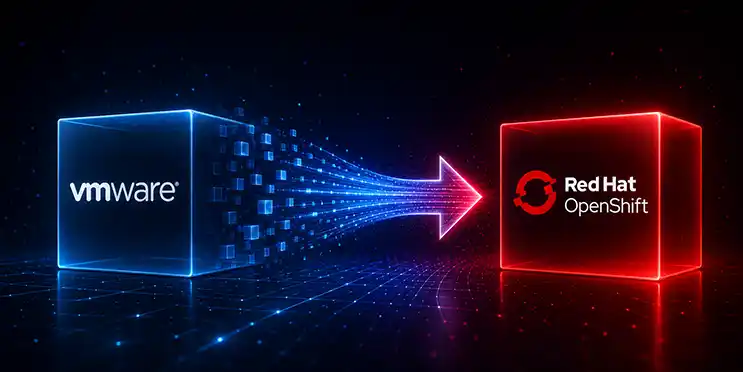
Broadcom’s acquisition of VMware in 2023 has led many organizations to reassess their virtualization strategy. Rising licensing costs and changing product structures are pushing businesses to evaluate alternative platforms that better align with their operational and financial requirements.
This shift is not simply about reducing costs. Virtualization platforms influence infrastructure management, resilience, security controls and long-term operational flexibility.
At the same time, the VMware alternatives market has matured significantly.
This article compares several leading VMware alternatives and examines the operational trade-offs behind each approach.
Why organizations are moving away from VMware
VMware has historically been the default virtualization platform for enterprise infrastructure. Its ecosystem, management tooling and mature feature set made it a widely adopted standard across private cloud environments.
However, the Broadcom acquisition introduced uncertainty for many customers. Changes to licensing structures, subscription requirements and product packaging have increased costs for some organizations, particularly SMEs that previously relied on perpetual licensing models.
This has created several operational concerns:
- Increased licensing expenditure
- Reduced flexibility around product selection
- Pressure to consolidate onto bundled solutions
- Uncertainty around future pricing and support models
- Reassessment of infrastructure strategy during renewal cycles
For some organizations, this is prompting a direct migration away from VMware. For others, it is accelerating broader conversations around modernization, containerization and platform consolidation.
The right alternative depends heavily on operational requirements, existing application architecture and the level of management expertise available internally.
Red Hat OpenShift
For organizations looking beyond traditional hypervisor replacement, Red Hat OpenShift represents a different operational model.
OpenShift is an enterprise Kubernetes platform designed to manage containerized workloads consistently across private cloud, public cloud and hybrid infrastructure. Rather than focusing purely on virtual machines, it standardizes how applications are deployed, scaled, secured and maintained.
This distinction is important because many organizations evaluating VMware alternatives are also reviewing how modern application environments should be operated long term.
While traditional hypervisors focus primarily on infrastructure abstraction, OpenShift introduces orchestration, lifecycle management and platform standardization at the application layer. This allows infrastructure teams to manage both modern container workloads and, through technologies such as KubeVirt and OpenShift Virtualization, virtual machines within the same operational environment.
This creates several advantages for organizations modernizing infrastructure:
Unified platform operations
OpenShift allows teams to manage containers and virtual machines through a consistent operational framework. This can reduce fragmentation between infrastructure tooling and application management processes.
Rather than operating separate orchestration systems, patching workflows and monitoring stacks, organizations can centralize operational controls across workloads.
Enterprise lifecycle management
One of the operational challenges with upstream Kubernetes is maintaining consistency across upgrades, security patching and cluster configuration over time.
OpenShift adds enterprise lifecycle tooling, including:
- Integrated upgrades and version management
- Security policy controls
- Role-based access management
- Built-in observability tooling
- Standardized deployment pipelines
This becomes particularly important for organizations without large internal platform engineering teams.
Infrastructure flexibility
OpenShift is infrastructure-agnostic, allowing deployments across on-premises infrastructure, dedicated servers, private cloud and public cloud environments.
This reduces dependency on a single infrastructure vendor while preserving workload portability between environments.
VMware migration alignment
For organizations currently running virtualized workloads on VMware, OpenShift Virtualization provides a migration pathway that supports both existing virtual machines and future container adoption.
This allows businesses to modernize incrementally rather than forcing immediate rearchitecting of all workloads.
Nutanix
Nutanix is one of the most established VMware alternatives in the hyperconverged infrastructure market.
Its platform combines compute, storage and virtualization into a unified software stack, simplifying infrastructure management through centralized tooling.
Nutanix AHV, the platform’s native hypervisor, has become increasingly attractive to organizations looking to reduce VMware licensing exposure while maintaining enterprise virtualization capabilities.
Key strengths include:
- Simplified infrastructure administration
- Integrated storage management
- Strong disaster recovery tooling
- Scalable hyperconverged architecture
- Mature enterprise support ecosystem
Nutanix is often well suited to organizations prioritizing operational simplicity and integrated infrastructure management.
However, as with most hyperconverged platforms, infrastructure flexibility can become more tightly coupled to the vendor ecosystem. Organizations should therefore evaluate long-term platform dependency, operational tooling compatibility and licensing structure carefully.
Proxmox
Proxmox has gained significant visibility in VMware migration discussions, particularly among SMEs and technically capable infrastructure teams.
As an open-source virtualization platform, Proxmox combines KVM virtualization with container support and centralized management tooling.
Its lower licensing costs make it attractive for organizations seeking to reduce infrastructure expenditure quickly.
Key advantages include:
- Lower overall licensing costs
- Open-source flexibility
- Support for both virtual machines and containers
- Relatively straightforward deployment
- Active community ecosystem
However, operational considerations become important at scale.
While Proxmox is highly capable technically, enterprise operational requirements such as lifecycle management, support response expectations, compliance alignment and large-scale automation may require additional internal expertise compared to more commercially mature enterprise platforms.
For technically experienced teams with strong in-house operational capability, Proxmox can provide substantial flexibility and cost efficiency.
Microsoft Hyper-V
Microsoft Hyper-V remains a common alternative for organizations already heavily invested in the Microsoft ecosystem.
Integrated closely with Windows Server and Microsoft management tooling, Hyper-V can provide a familiar operational environment for infrastructure teams managing predominantly Microsoft-based workloads.
Benefits include:
- Tight integration with Microsoft environments
- Familiar management tooling
- Lower licensing costs in some Microsoft licensing scenarios
- Suitable support for many traditional enterprise workloads
However, Hyper-V ecosystems can become closely aligned with broader Microsoft infrastructure dependencies. Organizations planning hybrid or multi-platform strategies should therefore assess long-term flexibility carefully.
Compared with platforms such as OpenShift, Hyper-V is also more focused on traditional virtual machine management rather than broader application orchestration and container lifecycle management.
Choosing the best VMware alternative for your business
There is no universal replacement for VMware because infrastructure requirements vary significantly between organizations.
Some businesses prioritize minimizing migration complexity. Others focus on reducing operational costs, improving infrastructure consistency or modernizing application delivery.
In practice, the best alternative depends on several factors:
Existing workload architecture
Traditional monolithic applications may align more naturally with hypervisor-led platforms such as Nutanix or Hyper-V.
Organizations increasingly adopting containers, microservices or hybrid application models may benefit more from platforms such as OpenShift that support broader application orchestration.
Internal operational capability
Some platforms provide greater flexibility but require more internal expertise for lifecycle management, troubleshooting and automation.
Others prioritize operational simplicity through integrated tooling and managed workflows.
Long-term infrastructure strategy
A VMware migration is often an opportunity to reassess future infrastructure direction rather than simply replicate the current environment elsewhere.
This includes evaluating:
- Container adoption plans
- Hybrid cloud requirements
- Security standardization
- Operational consistency
- Automation requirements
- Vendor dependency
- Application portability
Management and support requirements
Infrastructure platforms do not operate independently of the teams managing them.
Ongoing patching, configuration management, resilience testing, monitoring and upgrade planning all influence long-term operational stability.
For organizations without large in-house infrastructure teams, working with a managed hosting and platform partner can reduce operational overhead while improving consistency across deployment, migration and ongoing management.
At Hyve, our approach focuses on aligning infrastructure platforms with operational requirements rather than promoting a single deployment model for every organization. That includes supporting VMware migration projects, OpenShift environments, private cloud infrastructure and hybrid hosting strategies with 24/7/365 direct-to-engineer support.
As VMware licensing and infrastructure strategy continue to evolve, many organizations are using this moment to reassess how their platforms support long-term operational resilience, flexibility and cost control.