The challenge
Growing SaaS businesses often reach a point where a single server becomes a bottleneck. Increasing traffic, higher transaction volumes and the need for improved resilience mean infrastructure must evolve without disrupting customers or affecting application performance.
Our approach
No two businesses have the same infrastructure requirements, so every cloud migration begins with a detailed consultation. Our engineers assess your existing environment, business goals and future growth plans before designing a tailored managed cloud platform.
Following this consultation, our engineers design a tailored platform which meets your current needs, and can grow with your business.
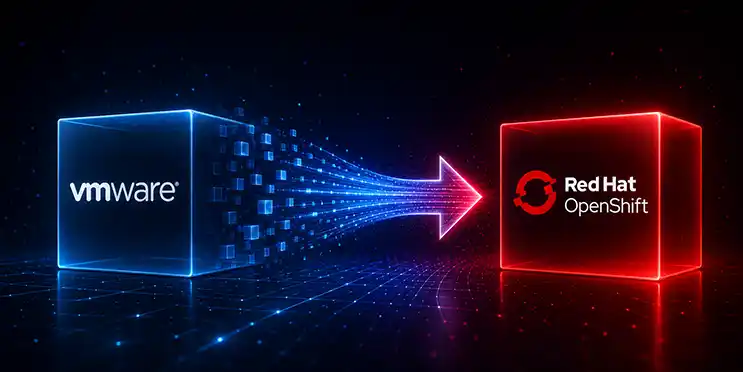
Our environments are custom, and so are our migrations. Rather than relying on a one-size-fits-all process, we create an approach that reflects your applications, workloads and operational requirements. For SaaS businesses, this often involves a staged migration, with data transferred outside peak operating hours to minimize disruption and maintain service availability.
Throughout the migration process, our engineers undertake regular testing to ensure the new platform is functioning as it should. Once testing has been completed and the new environment has been fully validated, live traffic is redirected from the previous platform to the new infrastructure.
This approach is designed to minimize downtime and disruption for both your team and your users.
The outcome
For a SaaS company, growth can be rapid, and your cloud hosting needs to keep up with this. Our managed multi-tenant cloud platform enables resources to scale up and down in line with demand, helping SaaS businesses handle traffic spikes without paying for unnecessary capacity during quieter periods.
With 24/7/365 monitoring and management, our team of engineers ensure your platform is running and optimized at all times, providing significant benefits over an unmanaged platform. This also offers the benefit of support that is available instantly, around the clock, rather than being time-zone dependent.
When is it time to migrate a SaaS platform?
There are several signs to look out for which signify it is time to consider migration:
- Your application is outgrowing a single server
- You need greater resilience and high availability
- Traffic spikes are affecting performance
- Your current provider cannot provide 24/7/365 support
- You want infrastructure that can scale alongside your business
Customer case study
This approach was used when supporting PTA Events, a SaaS fundraising platform serving thousands of schools and charities across the UK.
When PTA Events approached Hyve, the business was running its platform on a single server. This meant that any issues could cause all of their services to go down at once, causing significant disruption for their users.
They also faced an issue with support, with their support team primarily working in U.S. time zones. When they faced technical issues with their server, often during peak operating hours in the UK, they were unable to access support, leading to long periods of downtime.
After approaching Hyve Managed Hosting, PTA Events worked with our engineers to design a tailored platform, built on our multi-tenant Enterprise Cloud, and a migration plan. A staged migration meant that the transition to Hyve from their previous provider ran seamlessly.
More than eight years later, PTA Events continues to host its platform with Hyve. During that time, the business has grown from serving hundreds of users to thousands, while expanding internationally through the addition of global colocation services. Its hosting platform has scaled alongside that growth without the need for a complete infrastructure redesign.